

Today: 9:00AM - 8:00PM
Blog / Casa Kia

What You Can Expect from the 2020 KIA Forte
cq5dam.thumbnail.1353.900
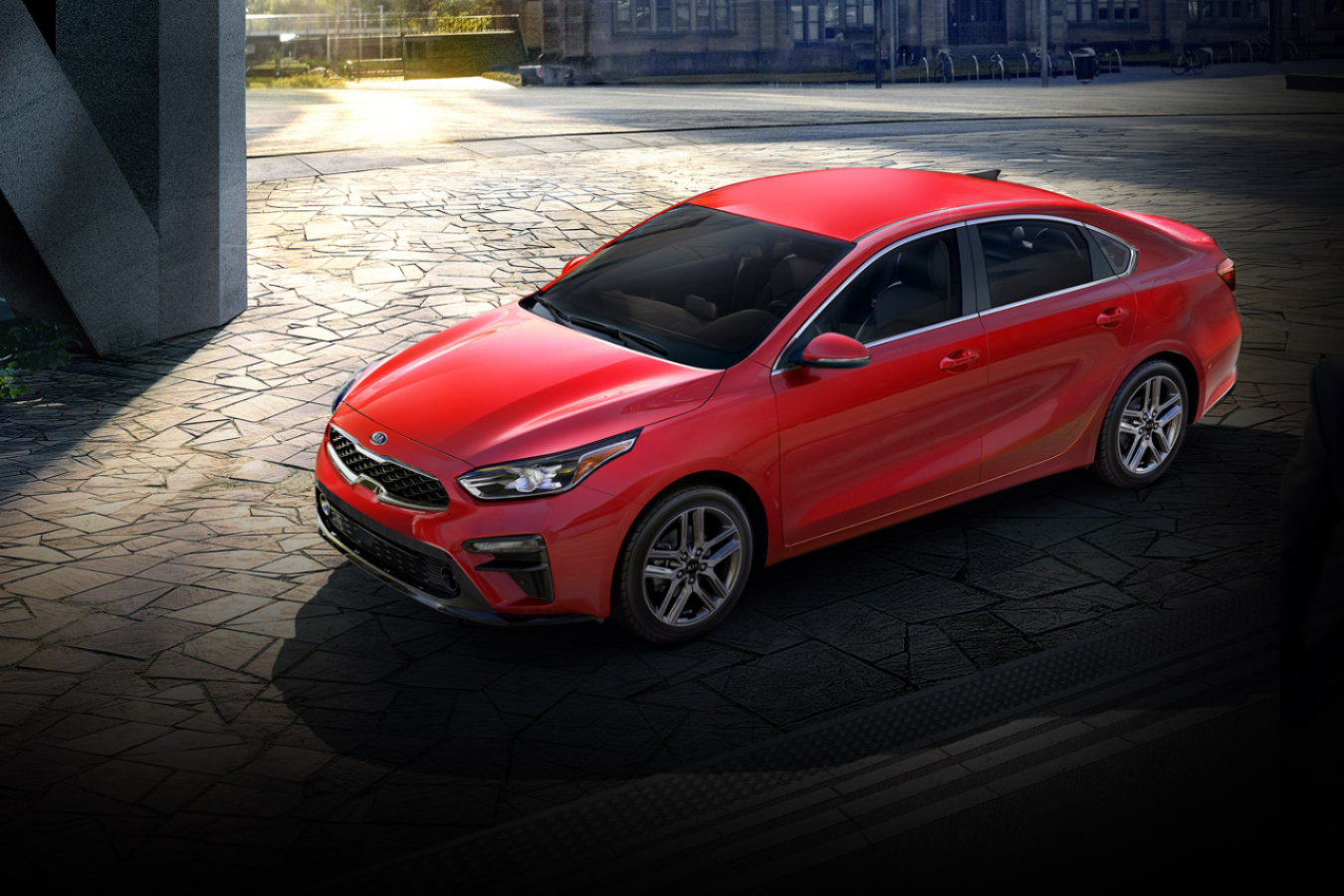
When it comes to powerful KIA cars, our team at Casa KIA knows exactly what to look for. One of the many models to join the 2020 KIA family lineup is the powerful sedan known as the 2020 KIA Forte. What makes a great sedan? Well, sedans often serve as a great balance between fuel economy, power, and comfort, and no model is better balanced than the 2020 KIA Forte. The 2019 KIA Forte was a huge success, and this year KIA follows the old adage of ‘if it ain’t broke, don’t fix it.’ With that in mind, KIA still made some great improvements on last year’s model, including a significant power boost. Last year’s model only included a single engine option, however, the 2020 KIA Forte includes both a 1.6-liter turbocharged four-cylinder engine producing 201 horsepower and 195 lb-ft worth of torque and a 147 horsepower 2.0-liter four-cylinder engine that earns an incredible 30 mpg in the city and 40 mpg on the highway. With the addition of a more robust engine, the 2020 KIA Forte trim lineup is changing as well, bringing the total number to five, including the FE, LXS, GT-Line, EX, and GT. Technology is taking a step forward too in this powerful sedan, adding features like wireless phone charging and a suite of active safety features. While the 2020 KIA Forte may not be in our showroom yet, we're excited to host this incredible sedan at our KIA dealership. If you have any questions about the 2020 KIA Forte or want some auto-related guidance, our team at Casa KIA have got all of your bases covered.

Posted in:

Related Posts

Red traffic light in a busy city center

Stop on Red Week: Promoting Safety at Intersections

Intersection crashes are among the most dangerous traffic incidents, often resulting in severe injuries and fatalities. To raise awareness and encourage safe driving, National Stop on Red Week is observed every year during the first week of August. This initiative serves as a vital reminder of the importance of adhering to traffic signals and underscores the devastating consequences of running red lights. The History and Importance of Stop on Red Week Established by the Federal Highway Administration (FHA) in 1995, National Stop on Red Week was created to educate the public about the severity of traffic collisions and the critical role traffic signals play in preventing accidents. The first stop sign appeared in Detroit in 1915, and by the late 1920s, the red background and octagon shape were standardized to reduce confusion and ensure clear communication to drivers. The statistics are striking: in 2016, 808 people were killed, and 137,000 were injured due to red-light running. Between 2008 and 2021, an estimated 11,296 lives were lost in crashes related to running red lights. These figures highlight the urgent need for initiatives like Stop on Red Week to remind drivers of their duty to obey traffic signals. Why Stop on Red Week is Crucial Traffic signals are essential control mechanisms that keep intersections safe. Stop on Red Week focuses on the dangers of reckless driving and the importance of following traffic signals to prevent accidents and save lives. Disregarding red lights and stop signs can lead to catastrophic collisions, underscoring the need for controlled speed and direction at intersections to ensure road safety. While most drivers understand basic traffic laws, their significance can sometimes be overlooked, making Stop on Red Week a crucial opportunity to reinforce why these rules are vital and their life-saving impact. Advanced Car Safety Features Modern technology has introduced a variety of advanced safety features designed to prevent accidents, especially at intersections. Here are some of the most effective features related to automatic emergency braking: Blind Spot Detection: Alerts drivers to vehicles in their blind spots, helping prevent side-impact collisions. Forward Collision Warning: Monitors the road ahead and warns drivers of potential collisions, providing time to react. Brake Assist: Enhances braking power during emergency stops, reducing stopping distances. Adaptive Cruise Control: Automatically adjusts speed to maintain a safe distance from the car ahead, now a standard feature in many new vehicles. Lane Keeping Assist: Helps drivers stay in their lane by providing corrective steering when needed. These features work together to improve safety and reduce the risk of accidents caused by human error. Be Safe This August with New Safety Features National Stop on Red Week is a critical campaign that highlights the importance of obeying traffic signals and the dangers of reckless driving. This week-long initiative aims to reduce intersection-related accidents and save lives by promoting safe driving habits, increasing public awareness, and encouraging the use of advanced vehicle safety features. At Casa Kia, we are proud to offer Kia cars equipped with some of the best safety features on the market. Regardless of the type of vehicle you currently own or are considering, our cars come with Forward Collision Warning and Highway Driving Assist optional in most new models. Trade in your outdated car today and upgrade to enhance your safety on the road this Stop on Red Week!

Car mechanic working in auto repair service.

Why Your Transmission is So Important to Drivers from Sunland Park, NM

There are a plethora of components that ensure the smooth and easy function of your vehicle. That said, your transmission deserves a place near the top of the list. At Casa KIA we’re home to a KIA maintenance team that understands the ins and outs of transmissions and why regular upkeep is so important. Wheels, cooling systems, and drivetrains all pale in comparison to the transmission. Your transmission provides power to your wheels and delivers all of your vehicle’s thrust and momentum. That said, the transmission of a car can be easily overlooked. Unlike motor oil, tires, or coolant, transmission maintenance doesn’t require checkups every few months, but that doesn’t mean it isn’t important. But what is your transmission used for? Well, your transmission is the intricate component responsible for changing gears in your engine and transferring the power provided by your engine to the wheels. Without your transmission, your vehicle wouldn’t function at all, which is why it can be so expensive to repair. That said, you can prolong the life of your transmission through some well-timed regular maintenance. There are a wide range of different transmission types including CVTs ( continuously variable transmissions), manual, and automatic just to name a few. Each come with their unique forms of maintenance, but in most cases, auto experts recommend that you have your transmission, and the lubricant that courses through it, checked every 30,000-50,000 miles. Keeping up with this expert standard can help you avoid serious mechanical issues, and ensure the long-term health of your vehicle. All that said, you should never take on transmission maintenance alone. When you visit our El Paso, TX KIA dealership our skilled crew of technical professionals will keep every component running at its optimum. From new cars to smart maintenance, we do it all at Casa KIA.

Mechanic working on a car engine

How Your Drivetrain Can Change Your Drive

When you visit Casa KIA you’ll find a wide array of KIA cars with unique drivetrains. Many of our customers from El Paso, TX and beyond have questions about their drivetrain options. Being informed about different drivetrain features is critically important, as your drivetrain choices can define the very nature of your vehicle. If you’ve ever wondered why one vehicle can take on the rough and tumble terrain of off-roading with simple ease, and while another vehicle may struggle to even cover ground in a little bit of dirt, the answer is the drivetrain. While the drivetrain isn’t the only factor that decides whether a vehicle is ready for some rugged adventuring or not, it can play a massive role in what kind of ground you can cover, and how easily you can cover it. There are a variety of drivetrain types out there, and they fit into four-different categories all-wheel-drive (AWD), front-wheel-drive (FWD), rear-wheel-drive (RWD), and four-wheel-drive (4WD). As you may already suspect, your drivetrain is the system of components and parts that are responsible for transferring power from the transmission to the wheels, propelling the vehicle forward. The components involved in this networked system include the driveshaft, CV joints, the differentials, the axle-shafts, and the U-joints. Unfortunately, not all drivetrains are created equal. Front-wheel and rear-wheel drivetrains both only provide power to two wheels. While this isn’t a huge deal for vehicles restricted only to the streets, two-wheel drivetrains will struggle on rough terrain or when road conditions are poor. Alternatively, four-wheel-drive and all-wheel-drive drivetrains provide power to all four wheels, as a result, you can enjoy superior traction and handling. No matter what drivetrain your car comes with, our KIA parts team at Casa KIA is here to answer any questions you may have about its capabilities. From car buying to our top-notch customer service, we’ll always take that extra step to ensure you leave our dealership satisfied.